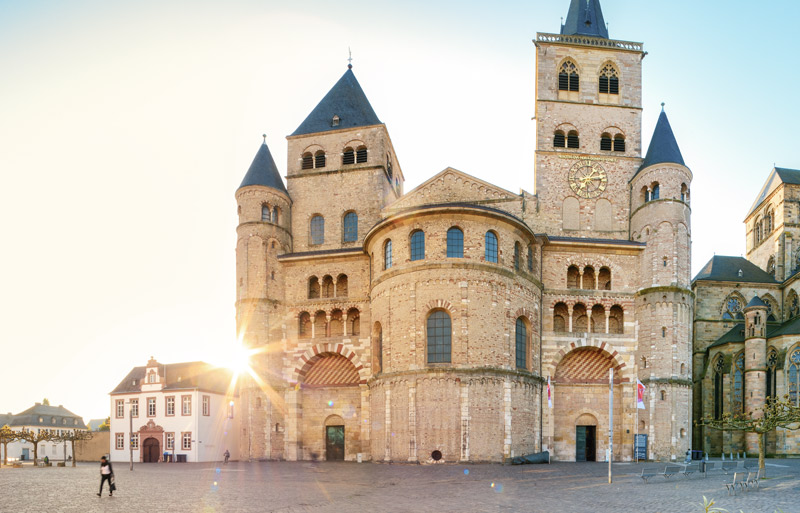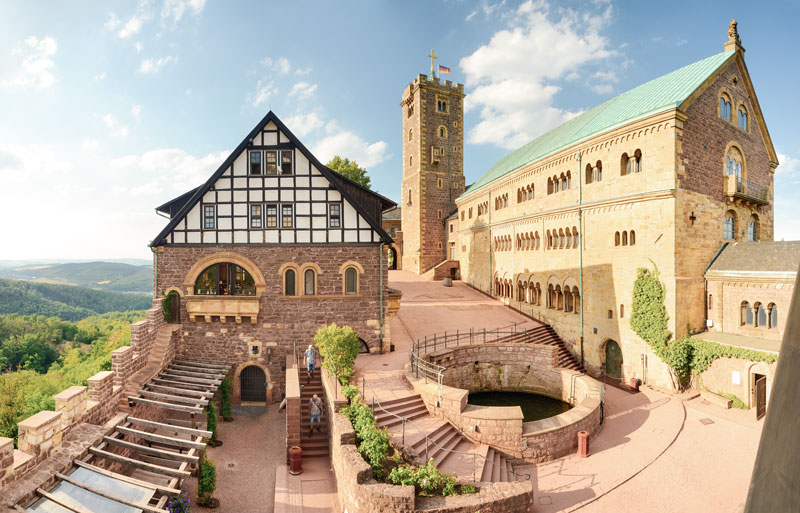
The Great Wall of China is a World Heritage Site, just like the Pyramids of Giza and the Acropolis in Athens. But you don’t have to travel around the world to experience part of UNESCO’s World Heritage. You can, for example, visit Cologne Cathedral, the castles of the Middle Rhine Valley, or the Wadden Sea.
Something for everyone: Germany is currently home to 54 World Heritage Sites, ranging from natural phenomena and architecture to art and industrial monuments. Most of them are located near youth hostels, which offer you an ideal base for excursions and often also provide programs to explore the surrounding World Heritage Sites.
In short: here are a few highlights, from north to south.All around the globe, UNESCO endeavours to preserve the most stunning natural and manmade sites, and for good reason: without our heritage and culture, we would lose contact with where our journey as a species has taken us. Germany boasts numerous UNESCO World Heritage Sites, making it a favoured travel destination for individuals, families, school classes and university students alike who yearn to discover the richness of our collective world history.
Breakfast with a View of a World Heritage Site
The Youth Hostel Tönning in Schleswig-Holstein is an ideal location to experience the Wadden Sea World Natural Heritage Site. The hostel has established itself as the “North Sea Coast Environmental Study Center” and offers guests several programs. Highlight: a trip out onto the mudflats, where equipped with nets and buckets and accompanied by the in-house environmental educator, you can go in search of lugworms.
Prefer a big city vibe? Then head to Hamburg, where the Youth Hostel Hamburg “Auf dem Stintfang” offers a unique panoramic view over the harbor. The World Heritage Site “Speicherstadt” is just a short walk along the harbor promenade.
Here you will not only learn a lot about the history of the port, but also discover many museums, the Elbphilharmonie concert hall, and fantastic photo opportunities.
Next stop: heading east. In Lutherstadt Wittenberg, the Reformation began. More than 500 years ago, Martin Luther is said to have nailed his 95 Theses to the door of the Castle Church. You can even stay overnight in part of the historic complex: at the Youth Hostel Wittenberg. Recommended for World Heritage fans: “Luther’s World Heritage: 500 Years of the Reformation – 100 Years of the Bauhaus” combines several UNESCO-designated sites. Included is the “WelterbeCard”.
On Foot to Erfurt’s Medieval Jewish Heritage
In Erfurt, Thuringia, UNESCO recognized the “Medieval Jewish Heritage” in 2023. The “Old Synagogue” is considered one of the oldest preserved synagogues in Europe – its history can be traced back to the late 11th century. The “Mikveh” and the “Stone House” are also part of the site. The Youth Hostel Erfurt – Hochheimer Straße is within walking distance of the old town, making both the World Heritage Site and the other attractions of the Thuringian state capital easily accessible for visitors.
More World Heritage Sites are located nearby. One of them is “Classical Weimar”, where you can follow in the footsteps of Goethe and Schiller. Those who are more interested in design and architecture can explore numerous Bauhaus sites in Weimar, Dessau, and Bernau. There is also plenty of choice when it comes to accommodation. In Weimar, the Youth Hostels “Maxim Gorki” and “Am Ettersberg”welcome guests. They offer programs for school classes to explore the World Heritage themes in depth.
The Ruhr Region Also Preserves World Heritage
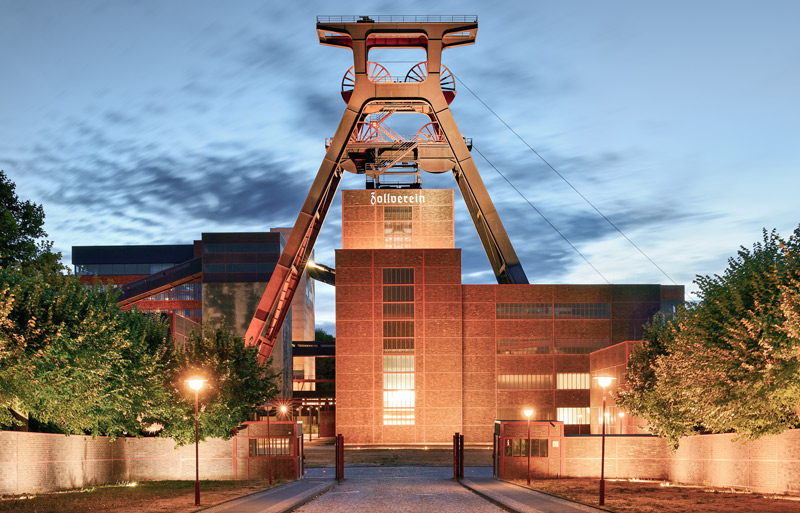
Deep in the west, the so-called Eiffel Tower of the Ruhr region awaits: the “Zollverein Coal Mine Industrial Complex”. The former hard coal mine in Essen is now an industrial monument and cultural center. In addition to learning about the region’s history, you can also attend concerts and even go swimming at the “most beautiful coal mine in the world.” The Youth Hostel Essen is your perfect starting point.
An outstanding virtue of humanity: patience. An impressive monument to it is the Cologne Cathedral.
It was under construction for more than 600 years. This masterpiece of Gothic architecture is just a short walk across the Rhine bridge from the Youth Hostel Cologne-Deutz.
Continue heading south along the 67-kilometer-long Upper Middle Rhine Valley World Heritage Site. In Rüdesheim, Bingen, Bacharach, Kaub, Oberwesel, St. Goar, and Koblenz, you can set off on exploration tours by boat, chairlift, or on foot with GPS devices. Travel back in time and fall under the spell of the “Loreley.”
Romantic Castles in the Middle Rhine Valley
As romantic as the surroundings is the stay in the seven youth hostels along the route. The former customs building was converted into the Youth Hostel Kaub. Stahleck Castle, dating back to the 12th century, now serves as the Youth Hostel Bacharach. And parts of Ehrenbreitstein Fortress function as the Youth Hostel Koblenz. What they all have in common: modern comfort has moved into these historic walls.
The Old Town of Bamberg, with more than 1,000 listed buildings, is entirely designated as a World Heritage Site.
Like ancient Rome, the Franconian city was built on seven hills. Not only that, it is also considered one of the most beautiful cities in Germany, which you can easily explore from the Youth Hostel Bamberg “Am Kaulberg”. In addition, the Bamberg World Heritage Center houses a fascinating interactive exhibition that explains the idea behind UNESCO World Heritage Sites.
Caves and Pile Dwellings: Journeys into the Past
You can embark on a journey back to the Stone Age on the Swabian Alb. Here, you will discover “Caves and Ice Age Art” from the last Ice Age 43,000 years ago. On a hike through the Achtal valley west of Ulm near Blaubeuren, you will pass the Geißenklösterle Cave, the Hohle Fels Cave, and the Sirgenstein Cave. Not cave-like at all, but warm and bright, the Youth Hostel Blaubeuren awaits you.
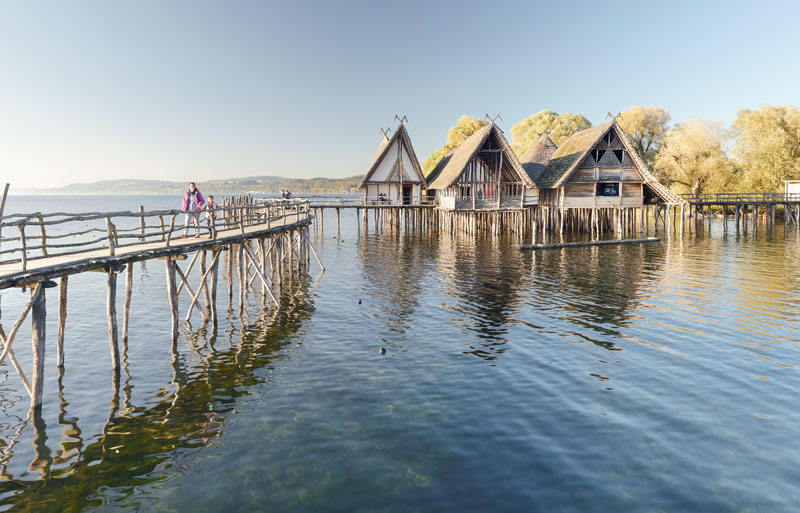
Continue towards the Swiss border. The pile dwellings on Lake Constance are remnants of settlements from the Late Neolithic period, the Bronze Age, and the early Iron Age. The Youth Hostel Überlingen not only offers a lake view, but is also the ideal starting point for excursions to the Pile Dwelling Museum in Unteruhldingen on Lake Constance.
World Heritage Becomes Even More Visitor-Friendly
This was just a small selection of the outstanding testimonies to human history and nature in Germany that bear the UNESCO World Heritage emblem. On the website of “UNESCO World Heritage Sites Germany e.V.”, you will find information on all 54 sites.
A map provides an overview. The association has also developed routes to help visitors combine several locations in one trip.